
The Short Answer: Roof hail damage can range from missing protective granules on asphalt shingles to cracked metal panels and hidden structural damage that leads to leaks and mold. After a hail storm, a professional roof inspection is the fastest way to identify the full extent of the damage and protect your home from further problems.
Hail causes roughly $1.07 billion in property damage across the United States each year, according to FEMA. Much of that damage lands on roofs, where it often goes unnoticed until a leak appears weeks or months later. A damaged roof left unaddressed invites water intrusion, mold growth, and more expensive repairs down the line.
What Is Roof Hail Damage?
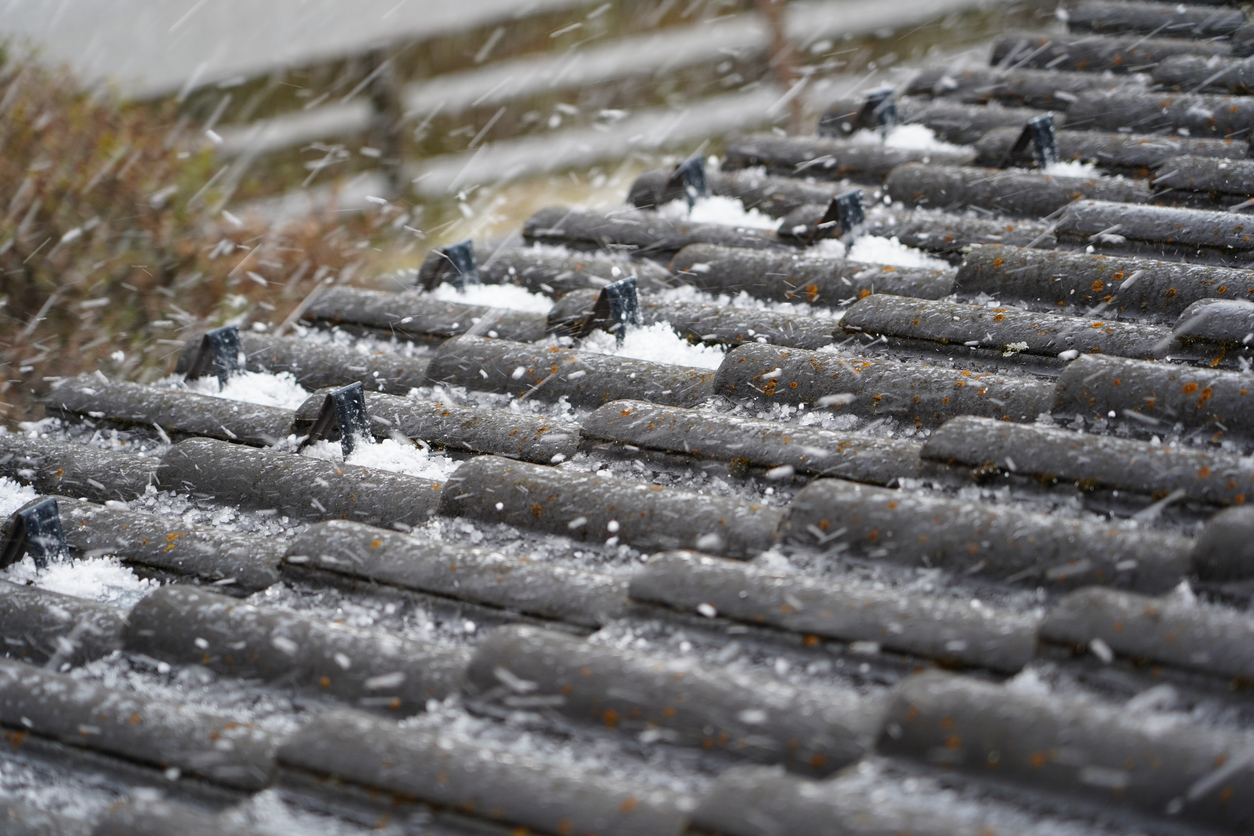
Roof hail damage happens when hailstones strike roofing materials with enough force to cause dents, cracks, punctures, or the loss of protective surface layers.
The severity depends on a few factors:
- Hailstone size. Hail smaller than 1 inch may not cause noticeable damage. Once hailstones reach 1 inch or larger, the risk of significant damage increases.
- Wind speed. Strong winds during a hail storm increase the impact force on your roof.
- Roofing material. Asphalt shingles, metal roofs, tile, and slate all respond differently to hail.
- Roof age and condition. Older roofs with existing wear are more vulnerable to storm damage.
Functional Damage vs. Cosmetic Damage
Functional damage affects how your roof performs. This includes cracked shingles, lost protective granules, or broken tiles that expose the roof deck to water. Functional damage requires repair or roof replacement.
Cosmetic damage refers to dents or marks that do not affect the roof’s ability to keep water out. Some homeowners insurance policies exclude cosmetic damage from coverage, so check your insurance policy for specific language about this distinction.
How Hail Affects Different Roofing Materials
Asphalt Shingles
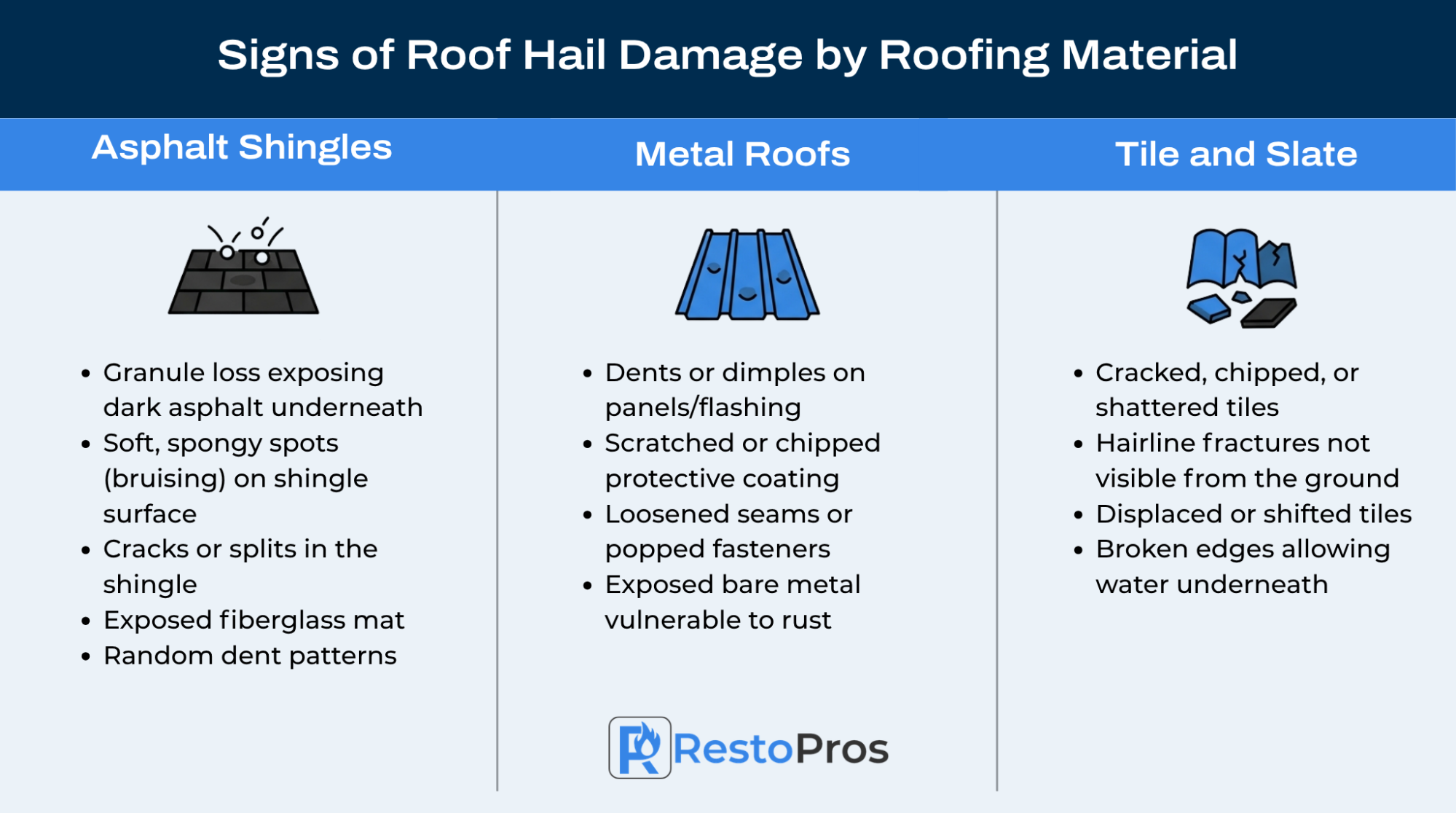
Asphalt shingles are the most common roofing material in the United States and among the most susceptible to hail damage. Signs of hail damage on an asphalt shingle roof include:
- Granule loss. Hailstones knock protective granules off the shingle surface, exposing the asphalt layer to UV rays.
- Bruising. A soft spot on the shingle that feels spongy when pressed.
- Cracks and fractures. Larger hailstones can split shingles, creating pathways for water to reach the roof deck.
Metal Roofs
A metal roof is more resistant to punctures, but metal panels can still sustain dents, scratched coatings that expose metal to corrosion, and loosened seams or fasteners from repeated impact.
Tile and Slate Roofs
These materials are brittle. Hail can crack, chip, or shatter tiles and slate, and the damage is not always visible from ground level. A professional inspection is the only reliable way to assess these roofing materials after a hail storm.
Where to Look for Hail Damage on Your Property
If hail hit your roof, it likely hit other parts of your property too. Visible damage to these areas is a strong indicator that your roof sustained damage, even if you cannot see it from the ground.
- Gutters and downspouts. Dents or an accumulation of shingle granules
- Siding and exterior walls. Dents, chips, or cracked paint
- Window screens and frames. Torn screens or dented frames
- HVAC units. Dents on the housing or bent fins
- Vehicles. Dented hoods or cracked windshields
Why You Should Not Inspect a Damaged Roof Yourself
Walking on a damaged roof is dangerous after a severe storm. Wet surfaces, weakened decking, and loose shingles create fall and injury risks. Untrained inspections also miss damage that a professional would catch, like hail bruising on asphalt shingles or hairline fractures in tile.
A professional storm damage assessment provides a thorough evaluation and the documentation your insurance company will need to process a claim.
What to Do After a Hail Storm
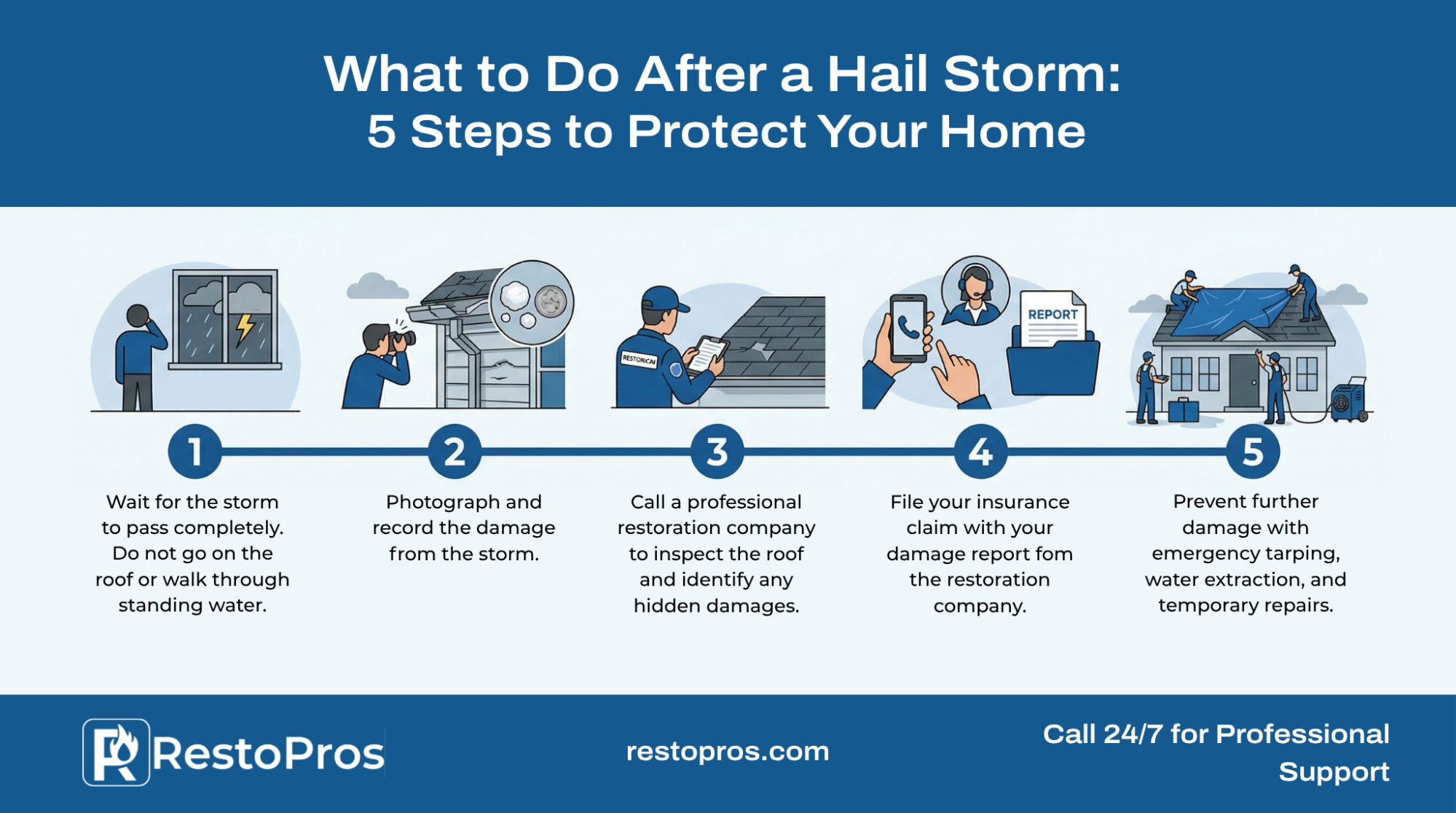
1. Stay Safe and Wait for the Storm to Pass
Do not go outside or attempt to check your roof during severe weather.
2. Document What You Can See From the Ground
Take photos and videos of any visible damage from ground level. Capture images of hailstones (place a coin next to them for scale), damaged siding, dented gutters, and debris in the yard.
3. Call a Professional Restoration Company
A trained team will inspect the roof for visible damage and hidden problems, check all areas of the property, document every finding, and prepare a detailed scope of damage for your insurance claim.
4. Contact Your Insurance Company
Once you have a professional assessment, call your insurance provider to file a hail damage claim. Documentation from a trained inspector strengthens your claim from the start.
5. Prevent Further Damage
If the roof is actively leaking, a restoration team can perform emergency tarping and water extraction to stop additional water damage, mold growth, and structural deterioration. Most homeowners insurance policies require you to take reasonable steps to prevent further damage after a storm.
Navigating the Insurance Claim Process
What Homeowners Insurance Typically Covers
Most standard homeowners insurance policies cover sudden hail damage to your roof, siding, windows, and other structures. According to the Insurance Information Institute, hail damage claims are among the most common property damage claims in the United States. Coverage typically includes roof repair or roof replacement, repairs to siding and windows, interior water damage caused by a compromised roof, and temporary repairs to prevent further damage.
Your Hail Deductible
Many homeowners policies in hail-prone areas include a separate hail deductible, which may be a flat dollar amount or a percentage (often 1% to 5%) of your dwelling coverage. Review your insurance policy or speak with your insurance agent before storm season so you understand your deductible structure.
The Insurance Adjuster Visit
After you file a claim, your insurance company will send an insurance adjuster to inspect the property. Having a professional restoration company on-site provides an independent damage assessment, support to point out damage the adjuster may overlook, and professional repair estimates based on actual restoration costs.
If the Settlement Offer Seems Low
You are not required to accept the first offer. You can request a re-inspection, hire a public adjuster, or provide supplemental estimates from a licensed roofing contractor. For more on this process, read our guide on storm damage insurance claims.
The Risk of Ignoring Roof Hail Damage
Delaying repairs after a hail storm can lead to problems that cost far more than the original damage.
- Leaks and water damage. Small cracks or granule loss can allow water to seep into the attic, insulation, and walls, leading to stained ceilings and warped framing.
- Mold growth. Moisture trapped inside walls and attic spaces creates conditions for mold to grow within 24 to 48 hours.
- Reduced roof lifespan. Without protective granules, asphalt shingles deteriorate faster. A localized repair can turn into a full roof replacement.
- Insurance claim complications. Most insurance policies require damage claims within a specific window (often 6 to 12 months). Delayed claims are more likely to be denied or reduced.
Hail Alley and High-Risk Regions
The area where Nebraska, Colorado, and Wyoming meet is commonly known as “Hail Alley” and averages seven to nine hail days per year, according to NOAA. States with the highest frequency of hail events include Texas, Kansas, Nebraska, South Dakota, Oklahoma, Colorado, and Missouri. Severe hail also occurs regularly across the Southeast and Midwest.
If you live in a hail-prone area, a roof inspection after every severe storm is a smart practice.
Protect Your Home After a Hail Storm. Call RestoPros.
Roof hail damage is one of the most common and most underestimated forms of property damage in the United States. Acting quickly protects your home from further damage, keeps your insurance claim on solid ground, and prevents expensive problems like water damage and mold.
RestoPros provides 24/7 emergency storm damage response, professional inspections, detailed documentation for insurance claims, and full restoration services from initial assessment to final rebuild. Our certified team works directly with your insurance company through every step.
Don’t wait for a small problem to become a big one. Contact RestoPros today for a professional damage assessment after your next hail storm.